

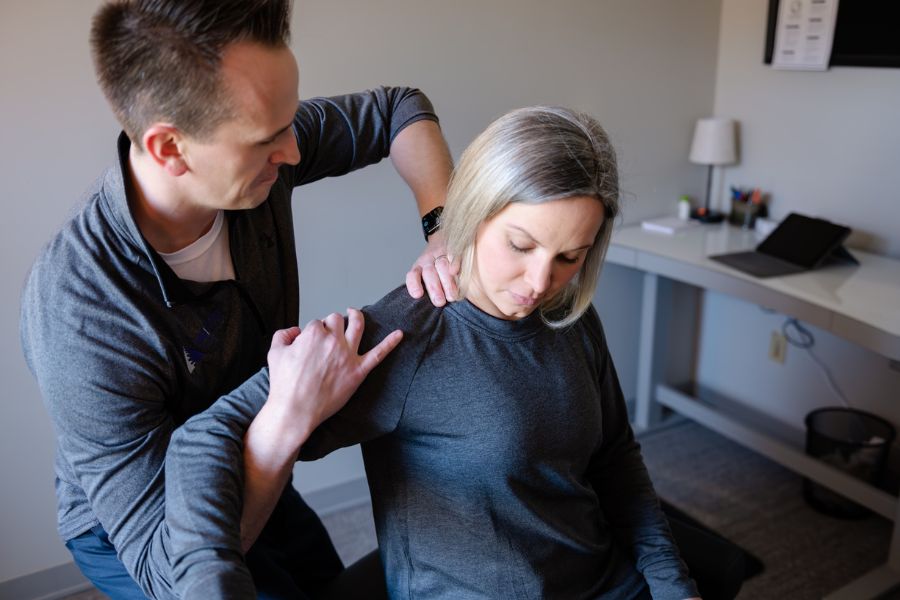
If you’ve noticed your shoulder becoming increasingly stiff and painful, frozen shoulder may be the cause. Frozen shoulder, also called adhesive capsulitis, is a condition that gradually limits your shoulder’s movement and can make even simple daily tasks frustrating.
The good news? While frozen shoulder can take time to improve, the right treatment can help reduce pain, improve mobility, and get you back to doing the things you enjoy.
What Is Frozen Shoulder?
Frozen shoulder is a condition where the connective tissue surrounding the shoulder joint becomes thickened and tight. As this tissue tightens, it restricts movement and often causes pain.
Unlike a shoulder injury that happens suddenly after a fall or accident, frozen shoulder usually develops slowly over weeks or months. Many people first notice mild discomfort before realizing they can no longer reach overhead, fasten a seatbelt, or put on a jacket without pain.
It most commonly affects adults between 40 and 60 years old, with women being slightly more likely to develop it than men.
What Causes Frozen Shoulder?
The exact cause isn’t always clear, but frozen shoulder often develops after the shoulder hasn’t been moving normally for an extended period.
Common risk factors include:
- Shoulder injuries
- Rotator cuff problems
- Shoulder surgery
- Broken bones requiring a sling
- Long periods of limited shoulder movement
- Thyroid disorders
One of the biggest risk factors is prolonged immobility. The less the shoulder moves, the greater the chance that stiffness can develop.
What Are the Symptoms of Frozen Shoulder?
Frozen shoulder typically develops in three stages.
Stage 1: Freezing
Pain gradually increases, especially with movement.
You may notice:
- Aching deep in the shoulder
- Pain at night
- Difficulty sleeping on the affected side
- Gradually losing shoulder movement
This stage may last several months.
Stage 2: Frozen
The pain often begins to decrease, but stiffness becomes much more noticeable.
You may struggle to:
- Reach overhead
- Reach behind your back
- Put on a coat
- Wash your hair
- Fasten a bra
- Reach into cupboards
Daily activities become increasingly challenging because the shoulder simply doesn’t move as it should.
Stage 3: Thawing
Gradually, shoulder motion begins returning.
Recovery can continue for many months, and while many people regain excellent function, improvement is often faster with appropriate treatment.
How Is Frozen Shoulder Diagnosed?
A healthcare provider can often diagnose frozen shoulder by:
- Discussing your symptoms
- Reviewing your medical history
- Performing a physical examination
- Measuring your shoulder’s range of motion
Sometimes imaging such as X-rays or an MRI may be recommended to rule out other shoulder conditions like arthritis or a rotator cuff tear.
Can Frozen Shoulder Go Away on Its Own?
Technically, yes—but that doesn’t always mean it’s the best approach.
Some people eventually recover over one to three years. However, without treatment, pain, stiffness, and loss of function may persist much longer than necessary.
Early treatment may help improve mobility, reduce pain, and make everyday activities easier while recovery progresses.
How Is Frozen Shoulder Treated?
Treatment depends on your symptoms and how much your shoulder is affecting daily life.
Common treatment options include:
- Activity modification
- Gentle stretching exercises
- Physical therapy
- Chiropractic care when appropriate
- Heat or ice
- Anti-inflammatory medications (when recommended by your physician)
- Corticosteroid injections for certain cases
In rare situations where symptoms remain severe despite conservative care, more advanced medical procedures or surgery may be considered.
Can Chiropractic Care Help Frozen Shoulder?
Chiropractic care isn’t about “popping the shoulder back into place.”
Instead, treatment focuses on improving how the shoulder, neck, and upper back move together while helping restore comfortable movement.
Depending on your individual needs, care may include:
- Gentle joint mobilization
- Soft tissue therapy, such as ART® or Graston
- Guided mobility exercises
- Postural education
- Home exercise recommendations
- Activity modifications
Many people also develop neck or upper back stiffness because they compensate for their painful shoulder. Addressing these areas may help improve overall movement and comfort.
Every case is different, so treatment should be individualized based on your symptoms and examination findings.
When Should You Seek Care?
Don’t wait until you can barely move your shoulder.
Consider scheduling an evaluation if you notice:
- Shoulder pain lasting more than a few weeks
- Progressive loss of shoulder movement
- Difficulty sleeping because of shoulder pain
- Trouble reaching overhead or behind your back
- Pain that’s interfering with work, exercise, or daily activities
The earlier frozen shoulder is identified, the sooner an appropriate treatment plan can begin.
Tips for Managing Frozen Shoulder at Home
While professional evaluation is important, these strategies may help you stay comfortable:
- Keep your shoulder moving gently without forcing painful motions.
- Apply heat before stretching if it feels helpful.
- Avoid complete rest for long periods.
- Follow your prescribed home exercises consistently.
- Be patient—recovery takes time.
Small improvements made consistently often lead to meaningful long-term progress.
The Bottom Line
Frozen shoulder is a common condition that causes pain, stiffness, and limited movement of the shoulder. Although recovery can take time, early recognition and appropriate conservative care may help reduce symptoms and improve your ability to return to everyday activities.
If you’re noticing increasing shoulder stiffness or pain that’s making daily life more difficult, an evaluation can help determine whether frozen shoulder—or another shoulder condition—is contributing to your symptoms.
Ready to Move More Comfortably?
If shoulder pain or stiffness is limiting your daily activities, the team at Pinnacle Hill Chiropractic is here to help. We’ll perform a thorough evaluation, explain what’s contributing to your symptoms, and develop an individualized treatment plan designed to help you move with greater confidence.
Schedule your appointment today and take the first step toward improving your shoulder mobility.


Leave A Comment